Buying an investment property can be challenging when the property is vacant or its current…
DSCR Loans for Short-Term Rentals: Pros and Cons
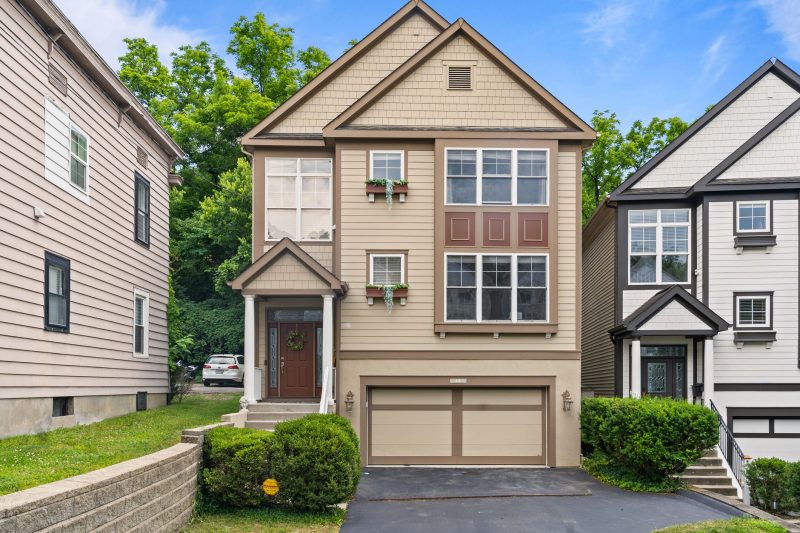
Financing a short-term rental can feel complicated when property income changes by season and traditional underwriting does not reflect the full investment strategy.
A DSCR loan uses a property’s expected rental income to measure its ability to support the proposed mortgage payment, rather than relying primarily on the borrower’s personal debt-to-income ratio.
In this guide, Haus Capital Corporation (NMLS# 1549644) explains the benefits, drawbacks and qualification considerations for using a DSCR loan to finance a short-term rental property.
Key Takeaways
- Purpose: DSCR loans help finance rental properties based primarily on property cash flow.
- Income Review: Short-term rental income may be evaluated through historical performance, market rent analysis or an approved rental income report.
- Requirements: Credit, reserves, property condition, appraisal results and the calculated DSCR commonly affect eligibility.
- Timeline: The process depends on appraisal complexity, income documentation, title review and lender guidelines.
- Potential Fit: DSCR financing may align with investors seeking a property-focused underwriting approach or building a larger rental portfolio.
Quick Answers About DSCR Loans
- What does DSCR measure? It compares qualifying monthly rental income with the property’s monthly housing obligation.
- Can projected short-term rental income be used? Sometimes. Lenders may consider an appraiser’s market analysis or an approved short-term rental income report, but requirements vary.
- Do DSCR loans review personal income? They generally place less emphasis on personal income calculations, although lenders still review credit, assets and other borrower information.
- Can a DSCR property be owned in an LLC? Many DSCR programs permit eligible business entities, subject to lender, title and closing requirements.
How Does a DSCR Loan Work for a Short-Term Rental?
Debt service coverage ratio, or DSCR, is generally calculated by dividing qualifying monthly rental income by the property’s monthly debt obligation. The debt obligation commonly includes principal, interest, property taxes, homeowners insurance and applicable association dues.
A ratio around 1.0 generally indicates that qualifying rental income is equal to the applicable monthly housing obligation. A higher ratio indicates more income relative to that obligation. Some programs may consider a ratio below 1.0 when other requirements are satisfied, but guidelines and pricing vary.
The calculation is not always standardized. One lender may use an appraiser’s long-term market rent estimate, while another may consider historical short-term rental statements or a separate market analysis. Some programs also apply adjustments for vacancy, management or operating expenses.
This makes income methodology an important part of the financing strategy. Two lenders can review the same property and reach different qualifying income figures based on their program guidelines.
Benefits of DSCR Loans for Short-Term Rentals
Qualification Focuses on the Property’s Cash Flow
Traditional mortgage underwriting commonly evaluates personal income, employment history and existing monthly obligations. That approach may not fully capture an investor’s position when income comes from multiple businesses, properties or variable sources.
A DSCR loan focuses primarily on whether the subject property can support its proposed housing payment. This can create a more direct path for borrowers with complex financial profiles, although the lender will still evaluate credit, assets, liquidity and the overall transaction.
Personal Tax Returns May Not Drive the Income Calculation
Many DSCR programs do not use personal tax returns to calculate qualifying income. This can be helpful when tax deductions reduce reported income or when a borrower owns several investment properties.
It does not mean documentation is eliminated. Borrowers may still need bank or investment statements, identification, entity documents, insurance information, lease records and proof of funds. The required documentation depends on the lender and transaction.
DSCR Financing Can Support Portfolio Growth
Investors purchasing multiple properties can encounter limitations when every transaction requires a full personal income analysis. DSCR underwriting may simplify that portion of the process by evaluating each property through its own rental income and debt obligation.
This structure can be useful for an established investor adding properties in Rochester, the Finger Lakes, Buffalo or other markets. The same principles may apply in Florida, South Carolina and other areas where short-term rental demand and regulations can differ significantly by municipality.
Eligible Entity Ownership May Be Available
Many DSCR programs allow a property to close in an eligible LLC or other approved business entity. This may align with how an investor organizes ownership and accounting.
Entity eligibility does not determine the legal or tax treatment of the investment. Borrowers should review those questions with qualified legal and tax professionals before selecting a vesting structure.
Program Structures Can Be Flexible
Depending on the lender, DSCR financing may be available for purchases, rate-and-term refinances and cash-out refinances. Fixed-rate and adjustable-rate structures may also be offered.
Our DSCR loan program overview provides additional information about this property-focused approach. Program availability, rates and terms change, so current guidelines should be reviewed for each scenario.
Drawbacks of DSCR Loans for Short-Term Rentals
Rates and Equity Requirements May Be Higher
DSCR loans are generally considered non-agency financing. Compared with conventional investment property financing, they may have higher current market rates, larger equity requirements or additional reserve requirements.
Pricing commonly depends on credit, DSCR, loan purpose, property type, occupancy strategy and available equity. Investors should compare the complete structure rather than evaluating the interest rate alone.
Short-Term Rental Income Can Be Difficult to Document
Short-term rental revenue can fluctuate based on seasonality, property availability, management, local events and operating decisions. Historical gross revenue may not match the income a lender is permitted to use.
A property with strong prior bookings may still require an appraisal or third-party report that supports market rent. A newly purchased property without an operating history may receive a more conservative income assessment.
Guidelines Vary Considerably by Lender
Some DSCR programs accept approved short-term rental income analysis, while others rely on traditional monthly market rent. Lenders may also differ on minimum property value, reserve expectations, borrower experience, entity ownership and eligible property types.
Clear communication early in the process can help identify these differences before an investor makes financing assumptions. The property address, intended rental strategy and available income records should be reviewed at the beginning.
Prepayment Provisions May Apply
Some DSCR loans include a prepayment provision that can affect the cost of selling or refinancing during a specified period. The structure and enforceability may depend on the program, transaction and state.
Borrowers should review the loan documents carefully and understand how a future sale, refinance or principal reduction may be treated. This is particularly important for investors with a shorter ownership plan.
Local Rental Rules Can Affect the Transaction
A lender’s willingness to consider short-term rental income does not establish that short-term rentals are permitted at the property. Municipal rules, zoning, licensing, condominium documents and homeowners association restrictions may limit or prohibit that use.
Requirements can differ between Greater Rochester, the Capital Region, Western New York and individual communities throughout the states we serve. Investors should confirm the property’s permitted use independently before relying on short-term rental revenue.
DSCR Loans vs. Conventional Investment Property Loans
| Feature | DSCR Loan | Conventional Investment Loan |
|---|---|---|
| Primary income analysis | Property rental income compared with the housing obligation | Personal qualifying income, debts and eligible rental income |
| Tax return treatment | Often not used to calculate personal qualifying income | May be required depending on income sources and property history |
| Entity ownership | May permit an eligible LLC or business entity | Individual ownership is commonly required at closing |
| Pricing | Often higher than agency financing | May offer agency-based pricing when guidelines are met |
| Short-term rental review | Program-specific income methods may be available | Treatment can be more limited and depends on current guidelines |
Neither structure is automatically the right choice for every investment. Conventional financing may provide more favorable terms when personal income documentation and agency requirements align. DSCR financing may offer a better structural fit when property cash flow is the central qualification factor.
Our overview of investment property loans can help borrowers compare additional financing approaches.
How to Prepare for a DSCR Short-Term Rental Application
- Confirm the intended use. Determine whether the property will operate as a full-time rental, mixed long-term and short-term rental, or another eligible investment use.
- Review local requirements. Check municipal rules, permits, zoning and any association restrictions before making revenue assumptions.
- Gather income records. Historical booking statements, operating statements, leases and property management reports may be helpful when permitted by the program.
- Estimate the complete housing obligation. Include principal, interest, taxes, insurance and association dues when applicable.
- Document available assets. Lenders commonly review funds for closing, reserves and required equity.
- Compare lender calculations. Ask how qualifying rent will be established and whether short-term rental data is acceptable.
As of 2026, DSCR guidelines remain lender-specific and can change with market conditions. Early planning and personalized guidance can help investors understand how a property may be evaluated before moving too far into a transaction.
Is a DSCR Loan the Right Strategy?
A DSCR loan may align with an investor who has complex personal income, owns multiple properties or prefers qualification centered on property cash flow. It may be less suitable when the projected rental income is inconsistent, the property has use restrictions or conventional underwriting offers a more efficient structure.
We believe every opportunity is different, and the financing strategy should be too. To explore your options, call, text or email us to review the property, compare available programs and understand the next steps.
Frequently Asked Questions
Can a DSCR loan finance a primary residence or second home?
DSCR loans are generally designed for non-owner-occupied investment properties. A borrower should not represent a primary residence or second home as an investment property, and occupancy must match the loan documents and actual intended use.
What documents are commonly requested for a DSCR loan?
Common documents include identification, asset statements, insurance information, purchase or title documents and entity records when applicable. The lender may also request leases, historical rental statements or an approved income report depending on how rental income will be calculated.
What happens if local rules restrict short-term rentals?
The lender may need to evaluate the property using an eligible alternative rental method, or the transaction may not fit that program. Borrowers should independently verify zoning, licensing and association requirements because mortgage eligibility does not establish legal permission to operate a short-term rental.
Can an investor refinance into a DSCR loan after renovations?
Potentially, subject to seasoning, appraisal, property condition, title and program requirements. The lender will also determine which value and rental income documentation can be used for the refinance.
Do all DSCR loans have a prepayment provision?
No. Prepayment terms vary by lender, state, loan structure and borrower eligibility. Investors should review the proposed terms carefully, particularly when planning to sell or refinance within a shorter period.

About the Author
Samuel J DiPiano
Founder & CEO / Mortgage Loan Originator at Haus Capital Corporation · NMLS #57865
Sam DiPiano is the Founder and CEO of HAUS Capital Corporation and a licensed Mortgage Loan Originator. He helps homebuyers, homeowners, and real estate investors navigate residential mortgage financing, with experience across conventional, government, non-QM, DSCR, investment property, and other financing solutions.
Specializes in: Conventional Loans, Jumbo Loans, Investment Property Loans
Licensed in: FL, KY, MI, NY, OH, PA, SC
Related Posts