Buying your next home before the sale of your current property is complete can make…
New Construction Loans: How We Help Buyers Finance a Custom-Built Home
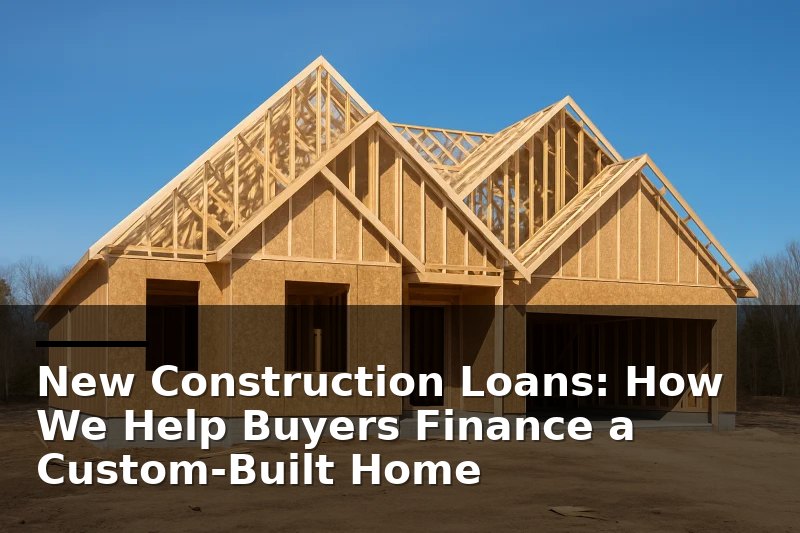
Building a custom home is exciting, but coordinating the land, builder, construction budget and mortgage financing can feel complicated.
A new construction loan finances the land and eligible costs of building a custom home through scheduled draws, with permanent mortgage financing arranged either in the same transaction or through a separate closing.
In this guide, we’ll explain how construction financing works, what lenders review and how we help buyers prepare for each stage of the process.
Key Takeaways
- Purpose: A construction loan can finance eligible land, labor, materials and other approved costs associated with building a custom home.
- Requirements: Lenders typically review the borrower, property, builder, plans, specifications, budget and construction timeline.
- Funding: Loan proceeds are generally released in stages as completed work is inspected and approved.
- Timeline: The financing process begins before construction and continues through completion, final inspections and permanent mortgage financing.
- Best For: Construction financing may fit buyers who want to build a primary residence, second home or qualifying investment property.
Quick Answers About New Construction Loans
At Haus Capital Corporation (NMLS# 1549644), we help buyers evaluate construction financing through personalized guidance and clear communication. Every build is different, so the loan structure should reflect the property, project budget and long-term financing goals.
- Does a construction loan involve one closing or two? It can involve either. A construction-to-permanent loan typically combines construction and permanent financing, while a two-close structure uses separate loans.
- How are funds released? Funds are commonly distributed through scheduled draws after an inspection confirms that an approved stage of work has been completed.
- Do borrowers make payments during construction? Borrowers often make interest payments based on the funds already drawn, although the payment structure varies by program.
- How much cash is needed? The required contribution depends on the program, borrower profile, land value, project budget and appraised completed value.
- When is the permanent mortgage rate established? The timing varies by loan structure and lender. Some programs address permanent financing terms at closing, while others require a later transaction.
How a New Construction Loan Works
A traditional purchase mortgage finances an existing property in its current condition. A construction loan is different because the lender is financing a home that has not yet been completed.
The lender reviews the project before construction begins and releases funds as work progresses. This draw process helps confirm that loan proceeds are being used for approved construction expenses and that the project remains aligned with the plans and budget.
1. Review the Project and Financing Goals
We begin by reviewing the borrower’s financial profile, the land, the proposed home and the expected project timeline. We also discuss whether the buyer already owns the lot, plans to purchase it as part of the transaction or needs to coordinate the sale of another property.
This early review helps identify a practical financing structure before significant project costs are committed. Buyers can also review our broader construction home loan options when planning a custom build.
2. Evaluate the Builder, Plans and Budget
The lender generally reviews the construction contract, architectural plans, specifications, cost breakdown and builder information. The builder may need to document experience, licensing, insurance and financial capacity, depending on the lender and project.
Builder eligibility and borrower eligibility are separate parts of the review. A financially qualified borrower may still need an acceptable builder and complete project documentation before the loan can move forward.
3. Order an Appraisal Based on the Completed Home
A construction appraisal estimates the property’s value as if the home were completed according to the submitted plans and specifications. The appraiser considers the proposed improvements, lot and relevant comparable properties.
This matters because construction financing is commonly based on both project costs and the expected completed value. A higher construction budget does not automatically produce an equal increase in appraised value.
4. Close and Begin the Draw Process
After underwriting and closing, funds are typically placed into a construction account. The builder requests draws as specific stages of work are completed.
An inspection is usually performed before each draw is released. These inspections are designed to confirm progress rather than provide the same detailed assessment as a buyer’s independent home inspection.
5. Complete Construction and Establish Permanent Financing
Once construction is complete, the lender may require final inspections, updated title work, confirmation that contractors have been paid and applicable occupancy documentation. The loan then converts to permanent financing or is paid through a separate permanent mortgage, depending on the original structure.
One-Close and Two-Close Construction Financing
The closing structure affects the process, documentation and long-term financing plan. Neither option is appropriate for every project.
| Feature | Construction-to-Permanent | Two-Close Structure |
|---|---|---|
| Closing process | Construction and permanent financing are generally arranged through one transaction. | The construction loan and permanent mortgage close separately. |
| Qualification | Permanent financing is generally underwritten before construction begins, subject to ongoing conditions. | The borrower typically qualifies again for the permanent mortgage after or near completion. |
| Flexibility | Can simplify the transition from construction to long-term financing. | May provide more flexibility when selecting permanent financing later. |
| Closing costs | Typically associated with one primary closing process. | Separate transactions may create additional closing expenses. |
Program structures, costs and qualification standards vary by lender. Buyers should verify current guidelines before selecting an approach.
What Lenders Review for a Custom Home Build
Construction financing requires a broader review than financing a completed home. The lender is evaluating both the borrower’s ability to repay the loan and the project’s ability to reach completion.
Borrower Qualifications
Lenders commonly review credit, income, assets, existing obligations and the proposed housing payment. Documentation may include tax returns, pay statements, bank statements, business records or other income documents based on the borrower’s circumstances.
Agency and program requirements establish the general framework, but individual lenders may apply additional underwriting standards. These lender overlays can affect credit, reserves, builder eligibility and project requirements.
Cash Reserves and Project Contingencies
Custom builds can experience material changes, weather interruptions or construction delays. Lenders may require reserves and a contingency allocation within the project budget.
A construction contingency is money set aside to address eligible costs that were not fully anticipated in the original budget. It is not a substitute for careful planning, but it can provide room for reasonable project adjustments.
Land and Existing Equity
If the buyer already owns the lot, the land’s documented equity may be considered within the financing structure. The lender will review the current title, any existing liens, the land value and how the property was acquired.
If the lot is being purchased with the construction loan, the land contract and acquisition cost are generally included in the overall review.
Plans, Specifications and Construction Contract
The lender needs enough detail to understand what is being built and how much it should cost. Plans and specifications typically address the home’s layout, size, materials, finishes and major systems.
Changes made after closing may require lender review. Material changes can affect the budget, appraisal, draw schedule and available funds.
Financing Higher-Value Custom Homes
A custom home may require financing above current conforming loan limits, which vary by county and can change. In that situation, a jumbo home loan structure may be considered for permanent financing or as part of a construction program.
Higher-value projects often receive additional review of liquidity, reserves, income documentation and property marketability. Unique design features can also make the appraisal more complex because comparable properties may be limited.
For buyers in Rochester, the Finger Lakes, Buffalo, Saratoga Springs and other New York communities, local construction costs and seasonal conditions can influence timelines. A financing plan should account for the specific property and build rather than relying on a general estimate.
Coordinating a Current Home With a Custom Build
Some buyers plan to sell an existing home before construction is complete. Others may want to retain the property until the new home is ready.
The timing can affect available cash, qualifying obligations and the amount needed for the construction transaction. Depending on the full financial profile, a bridge home loan may be one option to evaluate when coordinating equity between properties.
Bridge financing adds another obligation and is not appropriate for every scenario. We review the expected sale timeline, carrying costs, available reserves and backup plan before comparing this type of structure.
Common Construction Loan Tradeoffs
- More documentation: The lender must review the borrower, builder and construction project.
- Controlled disbursements: Funds are released through draws rather than provided all at once.
- Budget risk: Upgrades, change orders and unexpected work can increase the total project cost.
- Timeline risk: Weather, permitting, labor availability and material delivery can affect completion.
- Appraisal considerations: The completed value may differ from the total amount spent on the project.
- Program differences: Rates, terms, costs and underwriting requirements vary across lenders and may change.
How We Help Buyers Prepare
Our role is to bring the financing pieces together before and during the build. We review the proposed project, compare available loan structures and help identify documentation that may be needed from the borrower and builder.
We also coordinate with the lender, builder and other transaction professionals as the file moves through underwriting, closing and construction administration. The goal is to simplify the process and help buyers make informed decisions with confidence.
If you are considering a custom home in Greater Rochester, Western New York, the Capital Region or another community we serve, we invite you to call, text or email us. We can review your scenario, compare available options and help you understand the next steps. Let’s find the right strategy for your build.
Frequently Asked Questions
Can a construction loan include the purchase of the land?
Yes, some construction loan structures can include both the lot purchase and eligible building costs. The lender will review the land contract, project budget, appraisal and borrower qualifications before determining the available structure.
Can land that I already own be used toward the transaction?
Existing land equity may be considered, depending on the program and the lender’s valuation and title review. Any liens against the property and the documented cost or value of the land can affect how that equity is treated.
What happens if the project goes over budget?
Cost overruns are generally the borrower’s responsibility unless they can be addressed through an approved contingency or revised financing structure. Significant changes may require updated documentation, lender approval and additional funds from the borrower.
Can a self-employed borrower qualify for a construction loan?
Self-employed borrowers may qualify if they meet the applicable income, credit, asset and project requirements. Documentation varies by program and may include personal and business tax returns, financial statements, bank records and other evidence of stable income.
Does the lender need to approve the builder?
Construction lenders commonly review the builder before funding the project. Requirements vary, but the review may include licensing, insurance, experience, references, financial information and the proposed construction contract.

About the Author
Samuel J DiPiano
Founder & CEO / Mortgage Loan Originator at Haus Capital Corporation · NMLS #57865
Sam DiPiano is the Founder and CEO of HAUS Capital Corporation and a licensed Mortgage Loan Originator. He helps homebuyers, homeowners, and real estate investors navigate residential mortgage financing, with experience across conventional, government, non-QM, DSCR, investment property, and other financing solutions.
Specializes in: Conventional Loans, Jumbo Loans, Investment Property Loans
Licensed in: FL, MI, NY, OH, PA, SC
Related Posts